


The Power of Pastels

Updated: Apr 29
I have always been drawn to soft colours, even as I write this I am wearing a pastel blue suit, however it is lilac I am most drawn to. I find Bluebell flowers truly enchanting, it is their lilac tone that captivates me and I adore their audacity to take over our landscapes from April to May each year. I even embodied them in the theme of my fourth Runway fashion show; Bluebells & Mischief.
As we are currently seeing these gorgeous flowers paint our landscapes lilac, I felt compelled to research pastel colours; the history, the psychology and the influences, to find out why I love them so much.

Photo credit: Photographer & Stylist Meg Cox (Clothemod). Model: Isobel Higgins. Ring: Sieces Glass | Silver & Steel. Location: Ashton Court Estate for Clothemod’s ‘Bluebells & Mischief’ Runway promo photoshoot.
Pastels tell a story of power, and played a significant role across history. Now, in our modern day, they are the soft tones associated with spring and new beginnings. Pastels are calming colours, and even though they have seasonal association; I love to wear them all year round because, I believe, they are a breath of fresh air to the boring beiges and dreary monotones we are burdened with in modern shopping. So, as I am always preaching to convert you to a more fun and colourful wardrobe; here is the history of pastels.
Marie Antoinette
We begin our dreamy journey in the 18th century French Rococo period, with Marie Antoinette and her renowned wardrobe of pastel silks and layered dresses. A true princess, she was born in Austria and married Louis XVI in 1770. When travelling from Austria to France to be wed, then Maria Antonia Josefa Johanna, was stripped of her Austrian attire at the French border and redressed in clothing solely made in France. This signified leaving her status as Archduchess of Austria, and now destined to be the last Queen of France. Already it is clear to her the significance of clothing, and this may be the origin for her obsession with rare and extravagant garments; an obsession that would eventually shape the iconic pastel aesthetic and identity we still reference today.

Image by WikiImages from Pixabay. Queen Marie Antoinette.
During her reign, Marie Antoinette was a lavish spender; frills, ruffles, lace and corset bodices all accompanying impressive floor length silk skirts, even her sequins were solid silver decorated alongside gold thread. In one year she spent the equivalent of £1.3 million on fashion and decoration during her reign. Gorgeous, but a reason she was a target during the French Revolution and was heading for the guillotine (pun intended). Pastel pigments were very expensive, which influenced their link to power and hierarchy throughout history because only those with wealth could afford them.
Cotton Candy Coiffures
Also within this era, we saw the rise of wig wearers in high society. Often made with human, goat or horse hair, wigs were then coloured with powders commonly in pastel pinks, blues, violets and scented with lavender or other floral fragrances. Nicknamed ‘bushes of vanity’ or ‘cotton candy coiffures’, these wigs were often satirical and would contain elaborate decoration. Marie Antoinette famously wore one decorated with a model warship titled the ‘Coiffure à la Belle Poule’.
Wearing these pastel wigs signified a mark of social hierarchy and luxury fashion status from 1770 to 1780. Opposite to modern colour association, pink was related to men and blues to women, however, it also depended on your eye colour; brown eyes would be styled with pink wigs whereas blue eyes would be styled with blue. Eventually, wig powder was taxed around the time of the French Revolution which resulted in a decline in popularity. One function of these wigs was a way to cover up illnesses such as syphilis which would cause hair loss and skin conditions.

Image by Jo Justino from Pixabay.
Ancient Dyeing
Now, of course the Rococo era wasn’t the first place we see coloured dyes across history. Evidence of dyeing has been found dating back to 1500-1300 BCE in the Mediterranean where colour was being experimented with as an association with rituals and status.They would extract dyes from roots, leaves and bark from plants, minerals and insects. It was time consuming and an unpredictable process which demanded skilled hands.
We also see colour linked to the afterlife in Ancient Egypt where funerary items and wrappings incorporated colour. At this stage in history, colour was spiritual and symbolic, however, it soon shifted to a symbol of power, wealth and control.
Tyrian Purple
The colour purple is the rarest and most expensive to produce. It has been a sign of power and wealth since its production simply because no ordinary person could afford it (maybe my love for lilac is a hint to my taste for the things unique, weird and that are usually out of my budget!). Now, this psychological effect is still relevant. We see purple used in luxury branding, royal imagery and high end design.
Tyrian Purple is the name of a particular historic purple pigment and got its name from Tyre, a seafaring city known for trade and craftsmanship which became the centre of production and trade for purple dyes. Their dye required thousands of Murex sea snails to make even a tiny amount. They would crack open the shells and remove the hypobranchial gland which was then left to ferment; a pretty stinky process which is why dye workshops were often located away from cities. After, the gland liquid was exposed to sunlight and air which then a chemical reaction would change the colour gradually from yellow to green to blue and then finally to purple.
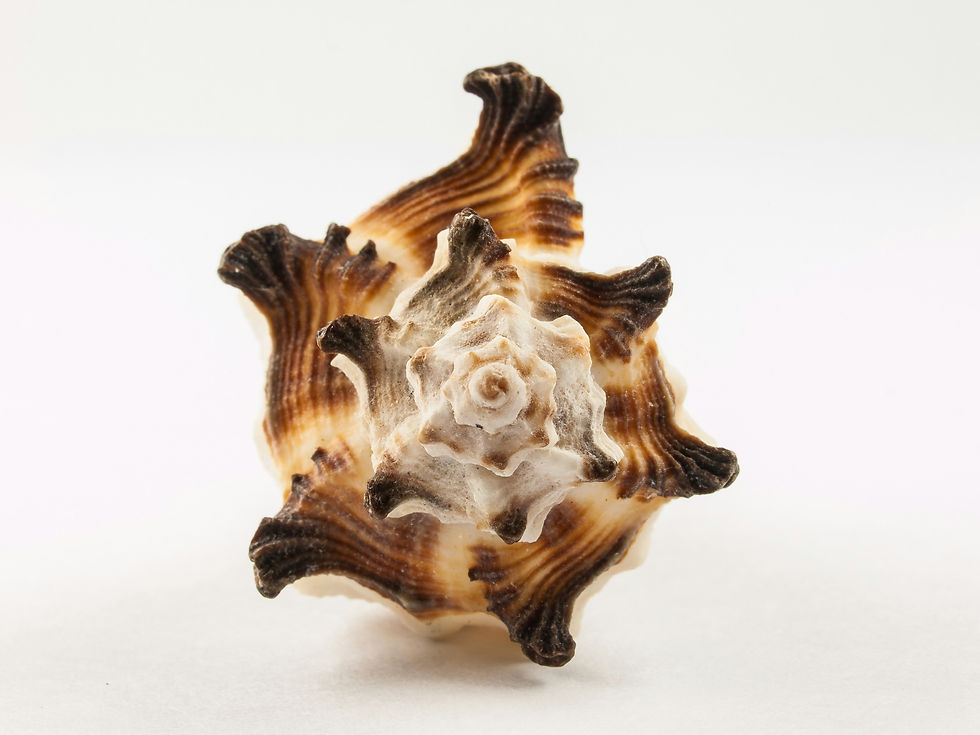
Photo by William Warby on Unsplash. Murex Indivia Shell.
The Accident
In a modern age where clothing is on demand and colour is unrestricted, society has become dissensitised to the labour intensive process that allows us to wear colour. It was in 1856, as a 19 year old chemist, William Henry Perkin, was attempting to create a treatment for malaria by experimenting with coal tar derivatives that he produced a dark, sticky residue. He attempted to clean this with alcohol and realised it produced a vivid purple solution. This is how the first synthetic dye, mauve or mauvine, was discovered!

Photo by Bermix Studio on Unsplash. A woman in a medical mask with a blue cap on her head and a laboratory flask.
This triggered mauve as a big fashion trend in the 1860s, even Queen Victoria wore it which exploded its popularity. And for the first time in history, vibrant colour was accessible to all! It’s all thanks to one mistake that gave way to our colourful wardrobes and influenced how colour now exists in modern society.
The ‘New Look’
It’s 1947, and Christian Dior is curating the new version of Woman. The ‘New Look’ was a redefined version of what women dressed like. This was post WWII, and a transition from boxy and broad silhouettes back into feminine hourglass figures. The waist is cinched, shoulders are rounded and shirts and dresses are full again. This countered the restrictive rationing mentality by now indulging in fabric, colour and decoration. Soft shades of pastel blue, pink and pale grey were a romantic cultural shift away from the practicality and military influence in black, navy, brown and dark grey. At this time, it is only the elite and wealthy who have access to this because fabric and dye were still expensive and seen as a luxury.

Image: Europeana on Unsplash. Title:'Rosée' by Carven - 1949. Palais.
Drunk-Tank Pink
Different colours have varied psychological effects, and pastel tones have been proven to have calming properties. Drunk-Tank Pink (also known as Schauss pink or Baker Miller Pink) is a specific shade of bubblegum pink which was historically used to reduce aggression.

Photo by Alexander X. on Unsplash.
Initially, in the 1960s, a group of psychologists in North America painted classrooms different colours like pink, blue, yellow and had their own predictions for how the colours would impact students. However, it was the pink room that had the most profound effect at calming unruly children, even compared to traditionally calming colours like blue.
From 1979 in Seattle, it was used in prison holding cells and psychiatric wards to calm inmates and patients, with now 20% of prisons and police stations in Switzerland feature at least one pink cell.
This particular shade of pink, “P-618”, had "a marked effect on lowering the heart rate, pulse and respiration as compared to other colors" (Schauss 1978). It is suggested that it's a combination of physiological and societal responses which insight this reaction; from the way pink interacts with your eyes to pink being associated with femininity and softness.
Plush
Pastel colours are calming signals to the brain. They can communicate gentleness, calmness and approachability. I’ve totally seen this too, when I wear a full pastel outfit I tend to have more conversations with strangers about it. Only yesterday was I called “plush” by someone who complimented me in the street, as I was wearing a pastel pink skirt and a light mint green jacket and scarf!
The word ‘plush’ eludes softness, comfort and safety, so it was absolutely a compliment from the stranger in the street. We can reach for pastel colours as a tool to insight these feelings and influence our environment also.
Amongst a busy and overwhelming world, with stimulation competing for your attention, pastels can offer some calm and solace. I embrace pastels in my wardrobe, and utilise them to bring me calm and joy as I wear them. The power of a pastel blue suit on a dreary day is unparalleled, trust me.
Pastels are more than a trend. They have moved through history from symbols of aristocratic luxury to psychological tools. Their softness carries meaning and history shows us that something as subtle as colour can shape how we see ourselves and others.

Photo credit: Photographer & Stylist Meg Cox (Clothemod). Model: Isobel Higgins. Ring: Sieces Glass | Silver & Steel. Location: Ashton Court Estate for Clothemod’s ‘Bluebells & Mischief’ Runway promo photoshoot.
If you’d like support with your fashion style, you can book an in-person Fashion Styling Session with me or try my remote styling service, Style Parcels, where outfits are delivered straight to your door. You can also follow @clothemod for more styling tips and inspiration.
Happy Styling!
Meg x


Comments